
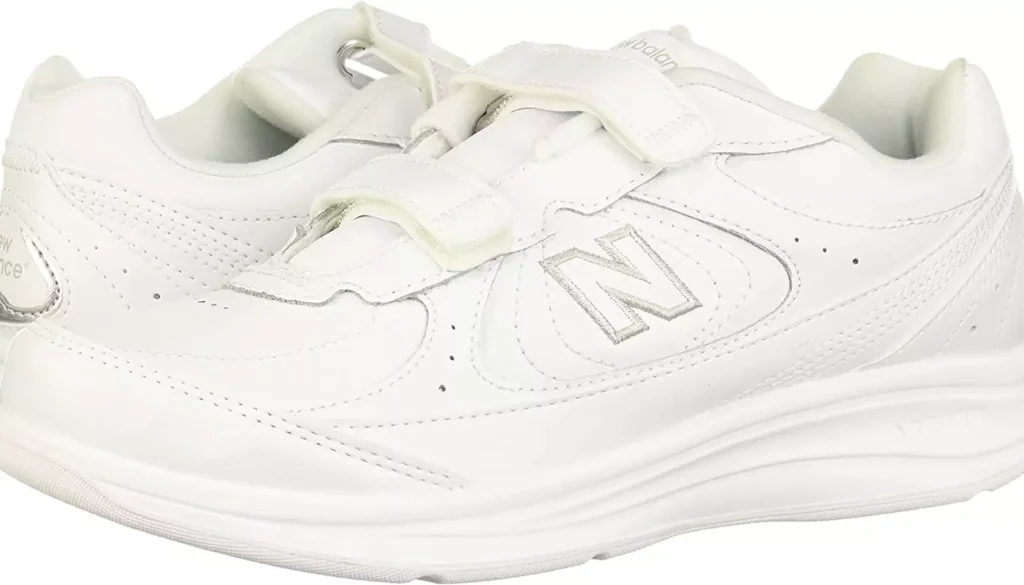
New Balance Shoes for Seniors
Best New Balance Shoes for Seniors: Complete 2025 Guide
Emergency Section – When Your Feet Are In Trouble
Written & Reviewed by


Call your doctor immediately if you experience:
- Sudden severe foot pain or swelling
- Open wounds, cuts, or sores on your feet
- Changes in skin color (turning blue, purple, or very pale)
- Signs of infection (warmth, red streaks, pus, fever)
- Numbness that spreads or gets worse
- Difficulty walking due to balance problems
For immediate relief while waiting for medical care:
- Elevate your feet above heart level
- Remove tight shoes and socks
- Apply ice wrapped in a towel for 15-20 minutes
- Do not walk on injured feet unless absolutely necessary
Key Takeaways
✅ Medicare covers special shoes only for diabetics with documented foot problems – not regular walking shoes
✅ New Balance offers the widest range of widths (from 2A to 6E) making them ideal for seniors with foot changes
✅ Look for velcro, slip-on, or elastic laces – avoid traditional laces that become difficult to manage
✅ Stability features matter more than maximum cushioning for fall prevention
✅ Replace shoes every 300-500 miles or 6-12 months – worn soles increase fall risk
Why Seniors Choose New Balance
New Balance stands out for seniors because they offer shoes in multiple width options, from narrow to extra-wide, and focus on stability and support features crucial for older adults. Unlike many brands that only offer standard widths, New Balance recognizes that senior feet often change shape due to conditions like arthritis, diabetes, and natural aging.
The company has been making shoes in New England factories since 1906, giving them deep experience with foot support technology. Many of their models are certified by the American Podiatric Medical Association (APMA) for promoting foot health.
Common Foot Problems Seniors Face
As we age, our feet change in ways that make shoe selection critical:
The Reality Check
- Feet spread and flatten – arches drop, requiring wider shoes
- Skin becomes thinner – making feet more sensitive to pressure
- Balance decreases – research shows 34.3% of elderly community residents experience balance disorders
- Conditions develop – arthritis, diabetes complications, poor circulation
- Mobility decreases – bending down to tie shoes becomes difficult
Specific Conditions Affecting Shoe Choice
Common senior foot issues include bunions (bony bumps), fallen arches, hammertoe, plantar fasciitis, and corns or calluses from repeated friction. Each condition requires specific shoe features for comfort and safety.
What Medicare Actually Covers (The Truth)
Let’s be clear about Medicare shoe coverage – most seniors won’t qualify for coverage of regular walking shoes.
Medicare WILL Cover:
Medicare Part B covers therapeutic shoes and inserts for people with diabetes who have documented severe foot disease, including history of amputation, foot ulcers, or circulation problems. Coverage includes:
- One pair of custom-molded shoes OR extra-depth shoes per year
- 2-3 pairs of inserts annually
- 20% copay after deductible ($257 in 2025)
Medicare Will NOT Cover:
- Regular athletic or walking shoes for non-diabetic seniors
- Shoes for general comfort or arthritis
- Over-the-counter insoles
- Multiple pairs for different activities
Bottom Line: Unless you have diabetes with severe foot complications documented by a doctor, plan to pay out-of-pocket for your shoes.
8 Best New Balance Shoes for Seniors (2025 Reviews)
1. New Balance 608v5 – Best Budget Choice
Price: $70-85 | Where to Buy: New Balance Store, Amazon, Dick’s Sporting Goods
Why It’s Perfect for Seniors: The 608v5 features New Balance’s ABZORB cushioning technology for shock absorption and joint protection, with a suede upper that’s more durable than mesh. Available in three width options.
Pros:
- Affordable price point
- Slip-resistant sole for wet conditions
- Supportive heel counter
- Easy to clean leather/suede upper
Cons:
- Limited color options
- Heavier than modern designs
- Basic styling
Best For: Seniors on fixed incomes who need reliable daily wear shoes.
2. New Balance 990v6 – Premium Stability Champion
Price: $185 | Where to Buy: New Balance Store
Why It’s Perfect for Seniors: The 990v6 incorporates FuelCell foam technology from running shoes, providing excellent arch support and well-padded interiors, all made in the USA with premium craftsmanship.
Pros:
- Superior build quality
- Exceptional arch support
- Multiple width options (2A to 4E)
- Made in USA
Cons:
- Expensive ($185)
- Can be heavy for some seniors
- Limited color choices
Best For: Seniors who want the absolute best support and can invest in quality.
3. New Balance Fresh Foam X 1080v14 – Maximum Comfort
Price: $165 | Where to Buy: New Balance Store, Fleet Feet
Why It’s Perfect for Seniors: Features god-tier cushioning that feels like walking on a mattress, with excellent support under the arch, heel, and forefoot. The Fresh Foam X technology provides superior shock absorption.
Pros:
- Maximum cushioning for joint protection
- Breathable engineered mesh upper
- Rocker design for smooth walking
- Wide toe box
Cons:
- Heavier than some prefer (10.5 oz)
- Higher price point
- Tapered toe box may feel restrictive for some
Best For: Seniors with arthritis or joint pain who need maximum cushioning.
4. New Balance 928v3 – Balance and Stability Focus
Price: $135 | Where to Buy: Amazon, specialty orthopedic stores
Why It’s Perfect for Seniors: Known for excellent arch support and cushioning, the 928v3 features Rollbar technology that helps control rear-foot movement, making it ideal for seniors with balance issues.
Pros:
- Rollbar stability technology
- Motion control features
- Excellent for overpronators
- Available in wide widths
Cons:
- Bulky appearance
- Limited availability
- Higher price for walking shoe
Best For: Seniors with balance problems or overpronation issues.
5. New Balance 577 Hook and Loop – Easy On/Off
Price: $120 | Where to Buy: Amazon, Zappos
Why It’s Perfect for Seniors: Features comfortable Velcro closures and exceptional shock absorption, built for durability and long-lasting wear with slip-resistant soles.
Pros:
- No-tie Velcro straps
- Medicare eligible for some conditions
- Leather construction
- Non-slip outsole
Cons:
- Limited style options
- Can look medical/orthopedic
- Higher price than lace-up versions
Best For: Seniors with arthritis, limited mobility, or dexterity issues.
6. New Balance 880v12 – Balanced Daily Walker
Price: $130 | Where to Buy: New Balance Store, running specialty stores
Why It’s Perfect for Seniors: Strikes a balance between cushioning and stability, with Fresh Foam midsole technology and engineered mesh upper for breathability.
Pros:
- Neutral support for most foot types
- Fresh Foam cushioning
- Breathable upper
- Good durability
Cons:
- Some find the engineered mesh warmer than knit alternatives
- Mid-range price point
- May need break-in period
Best For: Active seniors who walk regularly and want reliable daily shoes.
7. New Balance 940v4 – Motion Control
Price: $140 | Where to Buy: New Balance Store, Amazon
Why It’s Perfect for Seniors: Designed for seniors who overpronate (feet roll inward), featuring a high-density medial post for shock absorption and T-beam technology for arch support and torso stabilization.
Pros:
- Excellent motion control
- High-density shock absorption
- Three width options
- Good for overpronators
Cons:
- Can run large in sizing
- Stiffer ride than neutral shoes
- Limited color options
Best For: Seniors with severe overpronation or flat feet.
8. New Balance 5740 – Lifestyle Comfort
Price: $100 | Where to Buy: New Balance Store
Why It’s Perfect for Seniors: Features stacked midsoles that provide extra support and shock absorption, suitable for various activities from light walking to casual wear.
Pros:
- Versatile for multiple activities
- Stacked midsole for extra support
- Mudguard for durability
- Retro styling
Cons:
- Can run small in sizing
- Standard width only
- Less specialized than other options
Best For: Seniors who want one versatile shoe for multiple activities.
Sizing and Width Guide for Seniors
New Balance Width Options Explained:
| Code | Width | Best For |
|---|---|---|
| 2A | Extra Narrow | Seniors with very thin feet |
| B | Narrow | Women with naturally narrow feet |
| D | Standard | Most men, some women |
| 2E | Wide | Seniors with mild swelling |
| 4E | Extra Wide | Diabetes, severe swelling |
| 6E | Extra Extra Wide | Maximum accommodation needed |
Fitting Tips for Seniors:
- Shop in the afternoon – feet swell during the day
- Measure both feet – they’re often different sizes
- Account for changes – senior feet continue changing
- Consider orthotics – if you use them, bring them when trying shoes
Comparison Table – Key Features
| Model | Price | Velcro/Slip-On | Wide Widths | Best Feature | Fall Prevention |
|---|---|---|---|---|---|
| 608v5 | $75 | No | Yes (3 widths) | Budget-friendly | Good grip |
| 990v6 | $185 | No | Yes (2A-4E) | Premium quality | Excellent stability |
| 1080v14 | $165 | No | Yes (4 widths) | Maximum cushion | Good (rocker design) |
| 928v3 | $135 | No | Yes | Balance control | Excellent (Rollbar) |
| 577 H&L | $120 | Yes | Yes | No-tie design | Very good |
| 880v12 | $130 | No | Yes | Daily versatility | Good |
| 940v4 | $140 | No | Yes (3 widths) | Motion control | Excellent |
| 5740 | $100 | No | Standard only | Style + comfort | Fair |
Price Comparison Table
| Retailer | 990v6 | 1080v14 | 608v5 | 577 H&L |
|---|---|---|---|---|
| New Balance Direct | $185 | $165 | $80 | $120 |
| Amazon | $175-200 | $150-170 | $70-85 | $110-125 |
| Zappos | $185 | $165 | $80 | $120 |
| Dick’s Sporting Goods | N/A | $165 | $75 | N/A |
Prices as of August 2025, subject to sales and promotions
What to Look for When Buying
Essential Features for Senior Safety:
Look for low heel height (1-3 cm), avoid thick heavy soles that impair balance, and choose flatter soles to decrease ankle instability risk.
The Reality Check – What Actually Matters:
- Non-slip soles – Look for groove patterns that extend to the edge and allow water to escape
- Easy closure – Velcro, slip-on, or elastic laces
- Lightweight but supportive – heavy shoes cause fatigue and shuffling
- Wide toe box – prevents pressure on toes and accommodates swelling
- Firm heel counter – keeps foot properly positioned
Don’t Fall for Marketing Hype:
- “Maximum cushioning” isn’t always better – excess cushioning can contribute to impaired foot awareness and balance
- “Anti-aging technology” – shoes can’t reverse aging
- “Miracle insoles” – good shoes don’t need gimmicks
Difficulties You’ll Face (The Honest Truth)
Shopping Challenges:
- Sizing confusion – your size may have changed
- Limited selection – many stores don’t carry wide widths
- Price shock – quality senior-appropriate shoes cost $100-200
- Online uncertainty – hard to judge fit from photos
Wearing Adjustments:
- Break-in period – new shoes may cause temporary discomfort
- Maintenance needs – quality shoes require regular cleaning
- Multiple pairs needed – one pair won’t handle all activities
- Seasonal changes – foot swelling varies with weather
Maintenance and Care Tips
Making Your Shoes Last:
- Rotate pairs – don’t wear the same shoes daily
- Use shoe trees – maintain shape when not wearing
- Clean regularly – extends life and prevents odor
- Check wear patterns – uneven wear indicates problems
When to Replace:
Replace walking shoes every 300-500 miles or 6-12 months, whichever comes first. When foam no longer recovers from compression and shoes feel uncomfortable, it’s time to replace them.
Where to Buy – Official Links
New Balance Direct:
- Website: newbalance.com
- Benefits: Full size/width selection, free returns
- Phone: 1-800-253-7463
Authorized Retailers:
- Amazon: Largest selection, competitive pricing
- Zappos: Free shipping and returns, excellent customer service
- Dick’s Sporting Goods: In-store fitting available
- Fleet Feet: Gait analysis and expert fitting
Frequently Asked Questions
Q: Can I get New Balance shoes covered by Medicare? A: Only if you have diabetes with documented severe foot disease. Medicare covers therapeutic shoes for diabetics with conditions like foot ulcers, circulation problems, or amputation history. Regular walking shoes for general senior needs are not covered. Consult your healthcare provider to determine if you qualify.
Q: What width should I buy if my feet swell? A: Start with one width wider than your normal size and shop in the afternoon when feet are most swollen. Adjustable width shoes are recommended for seniors with balance problems as you can increase width but not length. Consult your healthcare provider if you experience significant daily swelling.
Q: Are expensive shoes really worth it for seniors? A: Quality shoes with proper support features can prevent falls and reduce pain, potentially saving money on medical bills. However, the most expensive isn’t always the best – focus on features that match your specific needs. Consult your healthcare provider about which features are most important for your condition.
Q: How often should I replace my walking shoes? A: Every 300-500 miles or 6-12 months, whichever comes first. Senior feet are more sensitive to worn cushioning, and worn soles increase fall risk. Consult your healthcare provider if you notice pain or balance changes that might be shoe-related.
Q: Can I wear running shoes for walking? A: Yes, many running shoes work well for walking. Running shoes are designed to be lighter and more flexible than dedicated walking shoes, but it’s typically unwise to wear walking shoes for running. Consult your healthcare provider about which type of shoe is best for your activity level.
Q: What if I have diabetes – do I need special shoes? A: Seniors with diabetes need shoes with extra depth, seamless interiors, and soft cushioning to reduce friction and pressure, helping prevent foot ulcers. Even if Medicare doesn’t cover them, investing in proper diabetic footwear is crucial. Consult your healthcare provider about specific diabetic footwear needs.
Additional Resources
Professional Help:
- Podiatrists: Find Medicare-approved providers at medicare.gov/care-compare
- Certified Pedorthists: Specialists in footwear modifications and orthotics
- Physical Therapists: Can assess balance and gait issues
Educational Resources:
- American Podiatric Medical Association: apma.org
- National Institute on Aging: nia.nih.gov
- Vestibular Disorders Association: vestibular.org
Balance and Fall Prevention:
- CDC Fall Prevention: cdc.gov/falls
- National Institute of Neurological Disorders: ninds.nih.gov
Disclaimer
This article is for informational purposes only and should not replace professional medical advice. Shoe needs vary greatly among individuals, and what works for one senior may not work for another. Program details, prices, and Medicare coverage can change. Always verify current information with relevant agencies and consult your healthcare provider before making significant changes to your footwear, especially if you have diabetes, balance issues, or other medical conditions. The author is not responsible for any injuries or complications that may result from following this advice.
Last updated: August 2025
About the Authors