
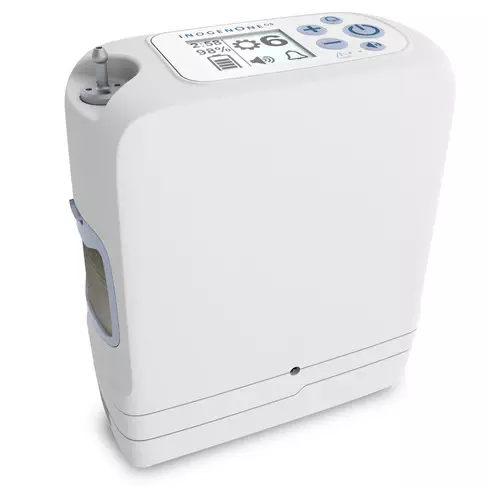
Oxygen Concentrator for Seniors
Complete Guide to Portable Oxygen Concentrators for Seniors – 2025
Written & Reviewed by


Last updated:
Emergency Section – When to Seek Immediate Help
Call 911 immediately if you experience:
- Severe difficulty breathing or gasping for air
- Blue or gray color around your lips, face, or fingernails
- Chest pain or pressure
- Confusion or severe dizziness
- Your oxygen concentrator stops working and you can’t breathe without it
If your oxygen concentrator fails:
- Switch to backup battery if available
- Try plugging into different power source
- Check all connections and tubing
- Contact your oxygen supplier immediately
- Go to nearest emergency room if breathing becomes difficult
Key Takeaways
- Medicare Coverage: Medicare Part B covers 80% of portable oxygen concentrator rentals (not purchases) after meeting the $257 deductible for 2025
- Doctor’s Prescription Required: You cannot buy a portable oxygen concentrator without a prescription from your doctor
- Price Range: New units cost $2,000-$4,000, with average around $2,500
- Battery Life: Modern units provide 4-16 hours of battery life depending on settings and battery size
- Travel-Friendly: All recommended units are FAA-approved for airline travel
- Weight: Today’s portable concentrators weigh 3-6 pounds, much lighter than old oxygen tanks
What is a Portable Oxygen Concentrator?
A portable oxygen concentrator (POC) is a medical device that takes in regular air (which contains about 21% oxygen) and concentrates it to deliver 90-95% pure oxygen to you through a nasal tube or mask. Unlike heavy oxygen tanks that need refilling, these devices run on electricity or rechargeable batteries and never run out of oxygen as long as they have power.
How They Work:
- Pull in air from around you
- Remove nitrogen and other gases using special filters
- Deliver concentrated oxygen through tubing
- Automatically adjust to your breathing pattern
Types of Oxygen Delivery
Pulse Dose (Most Common):
- Delivers oxygen only when you breathe in
- More battery-efficient
- Lighter weight
- Good for most daily activities
Continuous Flow:
- Provides steady stream of oxygen
- Better for severe conditions
- Heavier and uses more power
- May be needed for sleep or high oxygen requirements
Who Needs a Portable Oxygen Concentrator?
Your doctor may prescribe oxygen therapy if you have:
- Chronic Obstructive Pulmonary Disease (COPD) – Most common reason
- Emphysema – Part of COPD family
- Chronic Bronchitis – Another COPD condition
- Pulmonary Fibrosis – Lung scarring
- Heart Failure – When heart can’t pump efficiently
- Severe Asthma – In some cases
- Sleep Apnea – Combined with CPAP therapy
Medical Tests Required:
- Blood oxygen level (SpO2) below 88% at rest
- Arterial blood gas showing PaO2 ≤55 mmHg
- Exercise or sleep studies showing oxygen drops
Medicare Coverage Reality Check
What Medicare Actually Covers
Medicare Part B covers 80% of the rental cost of oxygen equipment after you meet your annual deductible of $257 in 2025. Important: Medicare does NOT cover purchasing a portable oxygen concentrator – only rentals.
Your Monthly Costs:
- You pay 20% of rental fee (typically $30-$80 per month)
- First 36 months: You make monthly payments
- After 36 months: Supplier continues providing equipment for free
- Total 5-year commitment with supplier
Medicare Requirements
- Doctor must prescribe oxygen as “medically necessary”
- Must use Medicare-approved supplier
- Doctor must provide evidence you need portable unit vs. tanks
- Regular testing to confirm ongoing need
Reality Check: If Medicare won’t approve a portable concentrator, you may need to purchase one yourself, which can cost $2,500-$4,000.
Cost Breakdown for 2025
| Cost Category | Price Range | Details |
|---|---|---|
| New Units | $2,000 – $4,000 | Average around $2,500 |
| Used/Refurbished | $1,000 – $2,500 | May have limited warranty |
| Monthly Rental | $150 – $400 | Before insurance |
| Medicare Share | $30 – $80/month | Your 20% after deductible |
| Extra Batteries | $300 – $800 | Helpful for longer outings |
Payment Options
- Direct Purchase: Pay full amount upfront
- Financing: Monthly payments through manufacturer
- Rental: Short-term or long-term options
- Insurance: Check private insurance coverage
Best Portable Oxygen Concentrators for Seniors – 2025
1. Inogen Rove 6 – Best Overall
Why Seniors Love It:
- Only 4.8 lbs with standard battery
- Quiet at 37 decibels (quieter than a library)
- Up to 12.75 hours battery life with extended battery
- 6 flow settings (1-6)
- 8-year expected service life
Specifications:
- Weight: 4.8 lbs (standard), 5.8 lbs (extended battery)
- Oxygen Output: Up to 1,260 mL/minute
- Battery: 6.5 hours (standard), 12.75 hours (extended)
- Price: Around $3,295
- Warranty: 3 years
Best For: Active seniors who travel frequently
Where to Buy:
- Direct from Inogen – Official manufacturer
- Main Clinic Supply – Authorized dealer with free shipping
- Oxygen Concentrator Store – Lowest price guarantee
2. CAIRE FreeStyle Comfort – Most Comfortable
Why Seniors Love It:
- Ergonomic curved design fits body naturally
- Up to 16 hours battery life with large battery
- Only 5 pounds with small battery
- Easy-to-read color display
- 3-year warranty includes sieve beds
Specifications:
- Weight: 5 lbs (small battery), 6 lbs (large battery)
- Oxygen Output: Up to 1,050 mL/minute
- Battery: 8 hours (small), 16 hours (large)
- Price: $2,800-$3,200
- Flow Settings: 1-5
Best For: Seniors who need all-day battery life
Where to Buy:
- CAIRE Official Website – Direct from manufacturer
- Home Medical Equipment – Authorized retailer
- LPT Medical – Batteries and accessories available
3. Inogen Rove 4 – Lightest Option
Why Seniors Love It:
- Under 3 pounds – remarkably lightweight
- Compact size fits in small purse
- Simple operation
- FAA-approved
- Reliable Inogen brand
Specifications:
- Weight: Under 3 lbs
- Oxygen Output: Pulse dose settings 1-4
- Battery: Up to 5+ hours with extended battery
- Price: $2,400-$2,800
- Flow Settings: 1-4
Best For: Seniors who prioritize lightweight portability
Where to Buy:
- Sleeplay – Competitive pricing with prescription upload
- Oxygen Concentrator Store – FAA-approved units specialist
- Portable Oxygen Solutions – Authorized Inogen dealer
4. Philips Respironics SimplyGo Mini – Budget-Friendly
Why Seniors Love It:
- More affordable option
- Simple controls
- Reliable brand
- Good for occasional use
Specifications:
- Weight: 5 lbs
- Oxygen Output: Pulse dose 1-5
- Battery: 4-9 hours depending on setting
- Price: $1,800-$2,400
- Flow Settings: 1-5
Best For: Budget-conscious seniors with occasional oxygen needs
Where to Buy:
- Philips Direct – Official manufacturer website
- The CPAP Shop – Medical equipment specialist
- American Discount Home Medical – Competitive pricing with free shipping
5. ResMed Mobi – Smart Features
Why Seniors Love It:
- Intuitive display
- Automatic adjustments
- Long-lasting battery
- Reliable performance
Specifications:
- Weight: 4.2 lbs
- Oxygen Output: Pulse dose 1-4
- Battery: Up to 13 hours
- Price: $2,600-$3,000
- Flow Settings: 1-4
Best For: Tech-comfortable seniors who like automatic features
6. CAIRE Eclipse 5 – Continuous Flow Option
Why Seniors Love It:
- Both pulse and continuous flow
- Higher oxygen output
- Durable construction
Specifications:
- Weight: 18.4 lbs (heavier but still portable)
- Oxygen Output: Up to 3 LPM continuous, pulse 1-6
- Battery: 5-10 hours depending on mode
- Price: $3,800-$4,200
Best For: Seniors needing continuous flow oxygen
Detailed Comparison Table
| Model | Weight | Battery Life | Flow Settings | Price Range | Best Feature |
|---|---|---|---|---|---|
| Inogen Rove 6 | 4.8 lbs | Up to 12.75 hrs | 1-6 pulse | $3,200-$3,400 | Longest service life |
| CAIRE FreeStyle | 5-6 lbs | Up to 16 hrs | 1-5 pulse | $2,800-$3,200 | Most comfortable design |
| Inogen Rove 4 | <3 lbs | Up to 5+ hrs | 1-4 pulse | $2,400-$2,800 | Lightest weight |
| Philips Mini | 5 lbs | 4-9 hrs | 1-5 pulse | $1,800-$2,400 | Most affordable |
| ResMed Mobi | 4.2 lbs | Up to 13 hrs | 1-4 pulse | $2,600-$3,000 | Smart technology |
| CAIRE Eclipse 5 | 18.4 lbs | 5-10 hrs | Continuous + pulse | $3,800-$4,200 | Dual flow modes |
Battery Life Comparison
| Setting Level | Inogen Rove 6 | CAIRE FreeStyle | Inogen Rove 4 | ResMed Mobi |
|---|---|---|---|---|
| Setting 1 | 12.75 hours | 16 hours | 5+ hours | 13 hours |
| Setting 2 | 6.5 hours | 8 hours | 4 hours | 8 hours |
| Setting 3 | 4 hours | 5 hours | 3 hours | 5 hours |
| Setting 4 | 3 hours | 3.5 hours | 2.5 hours | 3.5 hours |
Travel and Airline Guidelines
FAA Requirements
All recommended concentrators are FAA-approved for airline travel. However, you must:
Before Your Flight:
- Contact airline at least 48 hours before travel
- Get doctor’s letter confirming your oxygen needs
- Bring 150% of battery life needed for flight duration
- Request seat with power outlet if available
Required Documentation:
- Prescription for oxygen therapy
- Doctor’s letter stating flow rate needed
- POC user manual
- Extra batteries in carry-on (not checked luggage)
Airport Security:
- TSA allows FAA-approved portable oxygen concentrators
- Keep device with you – don’t check as luggage
- Arrive early for additional screening time
- Ask for assistance if needed
International Travel
- Check destination country’s regulations
- Verify your POC model is accepted
- Consider backup oxygen arrangements
- Bring power adapters for different outlets
Daily Living Tips
Making Life Easier
- Keep spare batteries charged – Have at least one backup
- Create “oxygen stations” – Place chargers in multiple rooms
- Use carrying accessories – Backpacks, shoulder bags, or rolling carts
- Plan activities around battery life – Know your unit’s limits
- Join support groups – Connect with other oxygen users
Maintenance Made Simple
- Clean air intake weekly – Use soft brush or cloth
- Replace filters monthly – Follow manufacturer schedule
- Check tubing regularly – Look for cracks or blockages
- Store properly – Keep in cool, dry place
- Service annually – Professional maintenance recommended
Reality Checks – The Challenges
What Companies Don’t Tell You
Battery Degradation:
- Batteries lose capacity over 2-3 years
- Replacement batteries cost $300-$800
- Cold weather reduces battery life significantly
Weight Reality:
- Even “lightweight” units feel heavy after hours of carrying
- Extended batteries add significant weight
- May need rolling cart for some situations
Noise Concerns:
- All units make some noise (30-45 decibels)
- May disturb others in quiet settings
- Some people feel self-conscious about the sound
Activity Limitations:
- Swimming and water activities not possible
- Very strenuous exercise may exceed oxygen output
- High altitudes may require setting adjustments
Common Problems
- Alarm fatigue – Units beep for various reasons
- Tubing tangles – Can be frustrating to manage
- Social anxiety – Some people feel embarrassed
- Travel complications – Airlines may have different rules
- Power outages – Need backup plan for charging
Financial Assistance Options
Beyond Medicare
Veterans Benefits:
- VA health care may provide full coverage if medically necessary
- Contact your VA provider for eligibility
Charitable Organizations:
- HealthWell Foundation offers grants for medical equipment
- American Lung Association provides resource lists
- Local Area Agency on Aging may have programs
State Programs:
- Medicaid may cover costs in some states
- State-specific assistance programs
- Low-income energy assistance programs
Manufacturer Programs:
- Payment plans available
- Trade-in programs for old equipment
- Rental-to-own options
FAQs
Q: Can I buy a concentrator without a prescription? A: No. Portable oxygen concentrators require a prescription from a doctor. This is a safety requirement to ensure proper oxygen levels and medical supervision. Always consult your healthcare provider before making any oxygen therapy decisions.
Q: How long do these machines last? A: Quality units like the Inogen Rove 6 have an 8-year expected service life. With proper maintenance, many units last 5-8 years of regular use. Discuss maintenance schedules with your healthcare provider and equipment supplier.
Q: Can I sleep with a portable concentrator? A: Inogen portable oxygen concentrators are designed with Intelligent Delivery Technology to provide oxygen effectively during sleep. However, some people need continuous flow for sleep. Your doctor will determine the best oxygen delivery method for nighttime use.
Q: What happens if my concentrator breaks while traveling? A: Most manufacturers offer loaner programs. Airlines may provide emergency oxygen. Always have backup batteries and contact your supplier immediately. Discuss emergency backup plans with your healthcare provider before traveling.
Q: Are there any side effects from using oxygen? A: Some studies show breathing high oxygen concentrations for extended periods may have negative lung effects. Your doctor monitors this through regular testing. Follow your prescribed oxygen levels and attend all scheduled medical appointments.
Q: Can I adjust the settings myself? A: Only adjust settings as prescribed by your doctor. Higher isn’t always better and can be dangerous. Never change prescribed oxygen settings without consulting your healthcare provider.
Q: Will Medicare cover a backup concentrator? A: Medicare typically covers one POC per patient. Backup equipment may be covered in specific medical circumstances. Discuss backup needs with your healthcare provider and Medicare representative.
Helpful Resources
Government Resources
- Medicare.gov – Official Medicare coverage information
- FDA.gov – Medical device safety information
- FAA.gov – Airline travel requirements
Medical Organizations
- American Lung Association – Oxygen therapy resources
- COPD Foundation – Support and education
- Medicare Rights Center – Coverage guidance
Equipment Suppliers
- Inogen – Manufacturer website
- CAIRE – Product information
- Oxygen Concentrator Store – Equipment retailer
Support Groups
- COPD360social – Online community
- Pulmonary Hypertension Association – Support network
- Better Breathers Club – Local support groups
Disclaimer
This information is for educational purposes only and should not replace professional medical advice. Oxygen concentrator requirements, Medicare coverage, and medical needs vary by individual. Program details, prices, and coverage can change without notice.
Always:
- Consult your healthcare provider before making oxygen therapy decisions
- Verify current Medicare coverage with Medicare.gov or your plan
- Confirm equipment specifications with manufacturers
- Check airline policies before traveling
- Follow your prescribed oxygen therapy exactly as ordered
The information in this guide was accurate as of August 2025, but medical devices, insurance coverage, and regulations change frequently. Always verify current information with official sources before making purchasing or medical decisions.
Emergency: If you experience breathing difficulties, chest pain, or your oxygen equipment fails, seek immediate medical attention or call 911.
About the Authors