
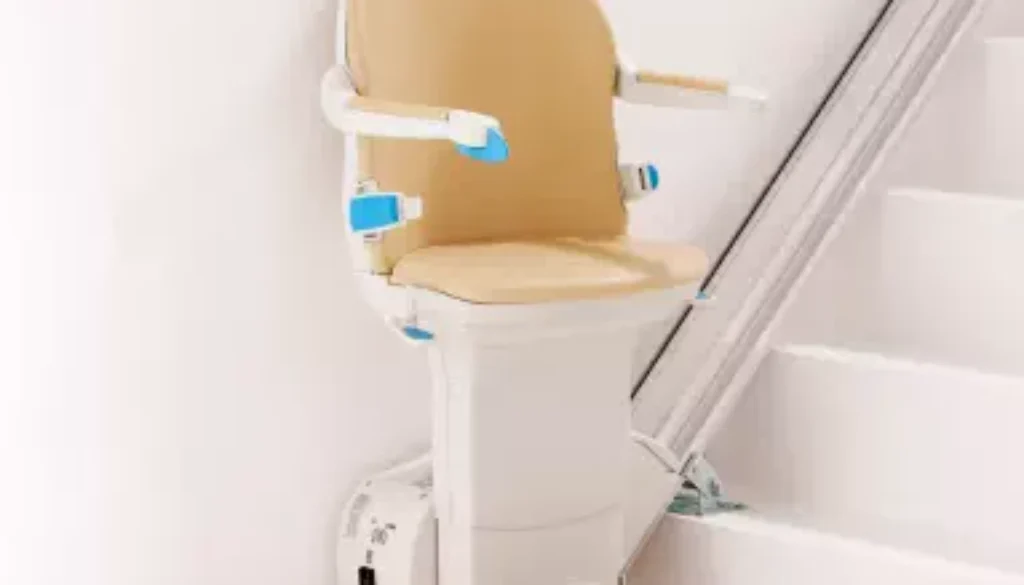
Stairlifts for Seniors
Best Stairlifts for Seniors: Complete Safety Guide, Costs & Medicare Coverage 2025
⚠️ Emergency Safety Section
Written & Reviewed by


If your stairlift stops working or you get stuck:
- Stay calm and don’t panic – Most issues can be resolved safely
- Use the manual lowering system – Every stairlift has emergency controls (usually a key or lever near the motor)
- Call for help immediately – Use your phone or medical alert device
- Don’t try to force the chair – This can cause injury or more damage
- Check the power – Look for tripped circuit breakers or unplugged cords
- Use the emergency phone numbers – Keep manufacturer’s 24-hour service line handy
During Power Outages:
- Battery backup should work for 10-20 trips
- Don’t overuse the battery – make only essential trips
- Call service company if battery seems weak
- Have a backup plan for extended outages
Fire Emergency with Stairlift:
- NEVER use stairlift during fire – It’s too slow for emergency evacuation
- Plan alternate escape routes from upper floors
- Consider bedroom on main floor if evacuation is impossible
- Install smoke detectors near stairlift controls
Emergency Contacts to Keep Handy:
- Stairlift manufacturer’s 24/7 service line
- Local dealer/installer contact
- Emergency services (911)
- Family member or neighbor
- Electrician (for power issues)
Important: Never attempt to repair electrical components yourself. Always call qualified technicians for any mechanical problems.
Key Takeaways
Before diving into details, here’s what every senior needs to know about stairlifts:
- Medicare Coverage: Original Medicare does NOT cover stairlifts – they’re considered home modifications, not medical equipment. Some Medicare Advantage plans may help.
- Real Costs (2025): Straight stairlifts: $4,000-8,000 installed. Curved stairlifts: $10,000-16,000 installed. Used/refurbished: 30-50% less.
- Safety First: According to the National Safety Council, stairlifts reduce stair-related injuries by 75% when properly installed and maintained.
- Installation Reality: Professional installation is essential – DIY attempts can be dangerous and void warranties.
- Permits Required: Most areas require building permits and electrical inspections for stairlift installation.
- Home Value Impact: May increase accessibility but could reduce broad market appeal – consider carefully.
Understanding Stairlifts: What Seniors Need to Know
A stairlift is a motorized chair that travels up and down a rail system attached to your staircase. It allows people with mobility issues to safely access different floors of their home without the physical strain and fall risk of climbing stairs.
Why Stairlifts Matter for Senior Safety
The Statistics Are Sobering:
- Over 1 million stair-related injuries occur annually in the US, with seniors accounting for 70% of fatal falls
- 65% of home accidents among seniors over 75 happen on stairs
- 37% of seniors avoid upper floors of their homes due to stair-climbing difficulty
- 1 in 3 seniors over 65 falls each year, often leading to loss of independence
Medical Conditions That Benefit from Stairlifts:
- Arthritis affecting knees, hips, or ankles
- Heart conditions limiting physical exertion
- Balance disorders or dizziness
- Chronic obstructive pulmonary disease (COPD)
- Recovery from hip, knee, or leg surgery
- Muscle weakness or neurological conditions
- Vision problems affecting depth perception
Types of Stairlifts Available
Straight Stairlifts:
- For staircases without curves or landings
- Use standard rail systems
- Price range: $4,000-8,000 installed
- Installation time: 4-8 hours
- Most common and affordable option
Curved Stairlifts:
- Custom-made for stairs with turns, curves, or landings
- Rails are individually measured and manufactured
- Price range: $10,000-16,000+ installed
- Installation time: 1-3 days
- More complex and expensive
Outdoor Stairlifts:
- Weather-resistant for exterior steps
- Special coatings and materials for durability
- Price range: $5,000-10,000 installed
- Require additional electrical protection
Platform Lifts:
- For wheelchair users
- Larger platform instead of seat
- Price range: $8,000-15,000 installed
- Require more space and structural support
Medicare and Insurance Coverage: The Reality
What Medicare Does NOT Cover
Original Medicare (Parts A & B): According to Medicare.gov, stairlifts are not covered because they’re classified as “home modifications” rather than durable medical equipment (DME).
Why Medicare Doesn’t Pay:
- Stairlifts are attached to the home, not portable
- Considered environmental modifications, not medical equipment
- Don’t meet the “primarily medical purpose” requirement
- Can’t be easily moved if you relocate
Limited Coverage Options
Medicare Advantage Plans: Some Medicare Advantage plans may offer limited coverage for home modifications, but this is rare and typically requires:
- Medical necessity documentation from doctor
- Proof that alternatives won’t work
- Pre-authorization and specific plan benefits
- Usually limited to basic models only
Medicaid Coverage: Medicaid may cover stairlifts in some states through Home and Community-Based Services (HCBS) waivers, but coverage varies significantly:
- Must qualify for nursing home level of care
- Long waiting lists in most states
- Extensive paperwork and approval process
- Only covers basic models
Veterans Benefits
VA Disability Housing Grants (2025):
- HISA Grant: Up to $8,760 for home modifications
- SHA Grant: Up to $24,405 for specially adapted housing
- SAH Grant: Up to $121,812 for major adaptations
- Requirements: Service-connected disability affecting mobility
Application Process: Contact your local VA office or call 1-800-827-1000. Documentation required includes:
- DD-214 (discharge papers)
- Medical records showing disability
- Home assessment by VA representative
- Contractor estimates for work
Alternative Funding Sources
State Programs: Many states offer assistance programs:
- Area Agencies on Aging: Local grants and low-interest loans
- State Disability Services: Home modification programs
- Housing Departments: Accessibility improvement grants
Non-Profit Organizations:
- Rebuilding Together: rebuildingtogether.org – Free home modifications for qualified seniors
- Habitat for Humanity: Local affiliates may help with accessibility modifications
- United Way: Local chapters often fund senior safety programs
Tax Deductions: Stairlifts qualify as medical expenses for tax deduction purposes if they exceed 7.5% of your adjusted gross income.
Best Stairlifts for Seniors (2025 Reviews)
After analyzing safety reports, installation data, and user feedback, here are the top options:
1. Bruno Elan Straight Stairlift – Best Overall
Price: $4,800-6,500 installed
Weight Capacity: 300 lbs
Type: Straight stairlift
Best For: Most seniors with straight staircases
What Makes It Special:
- Continuous charging system (never runs out of power)
- Slim profile rail (only 7 inches from wall)
- Diagnostic display shows system status
- Lifetime warranty on rail and motor
- Made in USA with local dealer network
Pros:
- Excellent reliability record
- Fast installation (4-6 hours)
- Strong warranty and service network
- Smooth, quiet operation
- Battery backup for power outages
Cons:
- Higher price than some competitors
- Limited color options
- Requires professional maintenance
Reality Check: Bruno has the best reputation for reliability, but you pay a premium for quality and service.
Where to Buy: Bruno Authorized Dealers | Call 1-800-882-8183
2. Acorn 130 Indoor Stairlift – Best Value
Price: $3,200-4,800 installed
Weight Capacity: 265 lbs
Type: Straight stairlift
Best For: Budget-conscious seniors with basic needs
What Makes It Special:
- Fast installation (often same day)
- Direct manufacturer sales (no middleman markup)
- Compact design (12 inches wide when folded)
- Simple controls with just two buttons
- One-year comprehensive warranty
Pros:
- Most affordable quality option
- Quick installation process
- Reliable operation
- Easy-to-use controls
- Good customer service
Cons:
- Lower weight capacity than competitors
- Shorter warranty period
- Basic features only
- Smaller seat may not fit larger users
Where to Buy: Acorn Stairlifts Direct | Call 1-855-581-8282
3. Handicare 1100 Straight Stairlift – Best for Heavy Users
Price: $5,500-7,200 installed
Weight Capacity: 350 lbs
Type: Straight stairlift
Best For: Larger seniors or those needing higher weight capacity
What Makes It Special:
- Highest weight capacity in standard models
- Extra-wide seat (20 inches)
- Advanced safety sensors
- Multiple seat height options
- Swedish engineering and quality
Pros:
- Excellent weight capacity
- Very comfortable seating
- Superior safety features
- Quiet operation
- Strong warranty coverage
Cons:
- More expensive than basic models
- Wider profile may not fit narrow stairs
- Complex controls for some users
Where to Buy: Handicare Dealers | Call 1-800-662-5715
4. Harmar Pinnacle SL600 – Best for Bariatric Users
Price: $7,500-9,500 installed
Weight Capacity: 600 lbs
Type: Heavy-duty straight stairlift
Best For: Seniors over 350 lbs or requiring extra support
What Makes It Special:
- Highest weight capacity available
- Extra-wide seat (22 inches) and platform
- Heavy-duty motor and rail system
- High back support for comfort
- Narrow footprint when folded (10.5 inches)
Pros:
- Unmatched weight capacity
- Very comfortable for larger users
- Robust construction
- Good safety record
- Professional installation network
Cons:
- Most expensive option
- Longer installation time
- Higher maintenance costs
- May be overkill for average users
Where to Buy: Harmar Dealers | Call 1-800-833-0478
5. Stannah Siena Curved Stairlift – Best for Curved Stairs
Price: $12,000-16,000 installed
Weight Capacity: 300 lbs
Type: Custom curved stairlift
Best For: Seniors with curved or spiral staircases
What Makes It Special:
- Custom-built rail for exact fit
- Hinged rail option for tight spaces
- DC motor system for smooth operation
- Diagnostic system for troubleshooting
- Industry-leading curved stair expertise
Pros:
- Perfect fit for any staircase shape
- Very smooth and quiet operation
- Excellent build quality
- Strong safety record
- Comprehensive warranty
Cons:
- Very expensive
- Long lead time (6-8 weeks)
- Complex installation
- Higher maintenance costs
Where to Buy: Stannah USA Dealers | Call 1-800-877-8247
6. AmeriGlide Rave 2 – Best Budget Option
Price: $2,800-4,200 installed
Weight Capacity: 265 lbs
Type: Straight stairlift
Best For: Seniors on tight budgets with basic needs
What Makes It Special:
- Lowest price point for new stairlift
- Factory-direct sales model
- Basic but reliable operation
- Standard safety features included
- Quick installation available
Pros:
- Most affordable new option
- Direct manufacturer pricing
- Adequate for basic needs
- Standard warranty included
- Simple operation
Cons:
- Lower build quality than premium brands
- Limited dealer network
- Basic customer service
- May have reliability issues over time
Reality Check: Good for temporary needs or very tight budgets, but may not last as long as premium options.
Where to Buy: AmeriGlide Direct | Call 1-800-790-1635
7. Savaria K2 Straight Stairlift – Best Compact Design
Price: $4,500-6,200 installed
Weight Capacity: 300 lbs
Type: Straight stairlift
Best For: Seniors with narrow staircases or space constraints
What Makes It Special:
- Smallest profile in the industry
- Flexible rail system
- Advanced safety sensors
- Easy-to-reach controls
- Canadian engineering quality
Pros:
- Extremely compact when folded
- Fits very narrow stairs
- Good safety features
- Reliable operation
- Reasonable pricing
Cons:
- Limited dealer network in some areas
- Fewer customization options
- Service may be slower in rural areas
Where to Buy: Savaria Dealers | Call 1-800-661-5112
Product Comparison Tables
Cost and Value Comparison (2025)
| Model | Price Range (Installed) | Weight Capacity | Warranty | Best Value For |
|---|---|---|---|---|
| AmeriGlide Rave 2 | $2,800-4,200 | 265 lbs | 1 year | Tight budgets |
| Acorn 130 | $3,200-4,800 | 265 lbs | 1 year | Best overall value |
| Savaria K2 | $4,500-6,200 | 300 lbs | 2 years | Narrow stairs |
| Bruno Elan | $4,800-6,500 | 300 lbs | Lifetime | Premium quality |
| Handicare 1100 | $5,500-7,200 | 350 lbs | 2 years | Heavy users |
| Harmar SL600 | $7,500-9,500 | 600 lbs | 2 years | Bariatric needs |
| Stannah Siena (Curved) | $12,000-16,000 | 300 lbs | 2 years | Curved stairs |
Safety and Reliability Features
| Model | Battery Backup | Emergency Stop | Diagnostic System | Safety Rating | Service Network |
|---|---|---|---|---|---|
| Bruno Elan | ✓ Advanced | ✓ Yes | ✓ Digital display | ⭐⭐⭐⭐⭐ | Excellent |
| Acorn 130 | ✓ Standard | ✓ Yes | ✓ Basic | ⭐⭐⭐⭐ | Good |
| Handicare 1100 | ✓ Advanced | ✓ Yes | ✓ Digital | ⭐⭐⭐⭐⭐ | Excellent |
| Harmar SL600 | ✓ Heavy-duty | ✓ Yes | ✓ Advanced | ⭐⭐⭐⭐⭐ | Good |
| Stannah Siena | ✓ Advanced | ✓ Yes | ✓ Digital | ⭐⭐⭐⭐⭐ | Excellent |
| AmeriGlide Rave | ✓ Basic | ✓ Yes | ✗ None | ⭐⭐⭐ | Limited |
| Savaria K2 | ✓ Standard | ✓ Yes | ✓ Basic | ⭐⭐⭐⭐ | Good |
Installation and Maintenance Requirements
| Model | Installation Time | Maintenance Needed | Parts Availability | Complexity Level |
|---|---|---|---|---|
| Bruno Elan | 4-6 hours | Annual service | Excellent | Medium |
| Acorn 130 | 2-4 hours | Minimal | Good | Low |
| Handicare 1100 | 6-8 hours | Annual service | Excellent | Medium |
| Harmar SL600 | 8-12 hours | Bi-annual service | Good | High |
| Stannah Siena | 1-3 days | Annual service | Excellent | High |
| AmeriGlide Rave | 3-5 hours | Minimal | Fair | Low |
| Savaria K2 | 4-6 hours | Annual service | Good | Medium |
Installation Process and Requirements
Before Installation Begins
Essential Pre-Installation Steps:
- Building Permit: Most areas require permits for stairlift installation – check with local building department
- Electrical Inspection: New 110V outlet may need electrical permit and inspection
- Structural Assessment: Professional evaluation of stair structure and weight-bearing capacity
- Measurements: Precise staircase measurements for proper rail sizing
- Access Planning: Ensure installation crew can bring equipment through home
Professional Installation Process
Day of Installation (Straight Stairlifts):
- Pre-installation meeting (30 minutes) – Final measurements and safety review
- Rail mounting (2-3 hours) – Securing rail to stair treads with heavy-duty bolts
- Electrical connection (1 hour) – Connecting to power supply and testing circuits
- Chair installation (1 hour) – Mounting chair unit and testing all functions
- Safety testing (30 minutes) – Multiple test rides and safety feature verification
- User training (30 minutes) – Operating instructions and emergency procedures
Reality Check: Professional installation typically takes 4-8 hours for straight stairlifts, 1-3 days for curved models. Don’t plan other activities on installation day.
DIY Installation: Why It’s Dangerous
The Accessibility Equipment Manufacturers Association (AEMA) strongly advises against DIY installation for these reasons:
- Risk of improper mounting leading to catastrophic failure
- Electrical hazards if not properly grounded
- Voided warranties if not professionally installed
- Liability issues if someone is injured
- Code violations that could affect home insurance
What Could Go Wrong:
- Rail detachment causing falls and serious injury
- Electrical shock or fire hazards
- Chair malfunction due to improper calibration
- Structural damage to staircase
- Legal liability for family members or visitors
Post-Installation Requirements
Building Code Compliance:
- Final electrical inspection (usually required)
- Building department approval and permit closure
- Documentation for homeowner’s insurance
- Safety feature testing and certification
Warranty Activation:
- Professional installation certificate
- User training completion documentation
- Registration with manufacturer
- First maintenance appointment scheduling
Real Costs: What You’ll Actually Pay (2025)
Straight Stairlift Costs Breakdown
Basic Installation Package:
- Equipment: $3,000-5,500
- Installation labor: $800-1,200
- Permits and inspections: $150-400
- Total: $3,950-7,100
Premium Package with Options:
- Equipment with upgrades: $5,000-7,500
- Installation with modifications: $1,200-2,000
- Permits, inspections, electrical: $300-600
- Total: $6,500-10,100
Curved Stairlift Costs Breakdown
Standard Curved Installation:
- Custom rail manufacturing: $8,000-12,000
- Installation (1-3 days): $2,000-3,500
- Permits and inspections: $300-700
- Total: $10,300-16,200
Complex Curved with Options:
- Multi-turn custom rail: $12,000-18,000
- Extended installation: $3,000-4,500
- Additional electrical/permits: $500-1,000
- Total: $15,500-23,500
Ongoing Costs to Consider
Annual Maintenance:
- Service contract: $200-400/year
- Parts and labor: $100-300/year
- Battery replacement (every 3-5 years): $150-300
Total Cost of Ownership (10 years):
- Straight stairlift: $6,000-12,000
- Curved stairlift: $13,000-25,000
Money-Saving Options
Used/Refurbished Stairlifts:
- Cost: 50-70% of new price
- Typically 1-year warranty
- Professional reconditioning included
- Best for straight stairs only
Rental Options:
- Short-term (3-6 months): $250-400/month
- Long-term (1+ years): $150-300/month
- Purchase option usually available
- Good for post-surgery recovery
Financing Programs:
- Most dealers offer financing
- Terms: 12-84 months
- Interest rates: 6-24% depending on credit
- Monthly payments as low as $79
Safety Considerations and Building Codes
Federal Safety Standards
UL 2089 Standard: All stairlifts sold in the US must meet Underwriters Laboratories safety standards including:
- Emergency stop systems
- Overspeed governors
- Battery backup power
- Obstruction sensors
- Seat belt requirements
ADA Compliance: While not required for private homes, ADA guidelines recommend:
- Clear width of 32 inches when stairlift folded
- Contrasting colors for visibility
- Easy-to-reach controls
- Non-slip surfaces
Local Building Code Requirements
Common Code Requirements:
- Building permits for installation
- Electrical permits for new circuits
- Inspection of mounting points
- Fire safety compliance
- Accessibility standards compliance
Fire Safety Considerations:
- Stairlifts should not block fire exits
- Emergency evacuation plans must be updated
- Consider bedroom relocation if upper floor evacuation impossible
- Install smoke detectors near stairlift controls
Installation Safety Requirements
Structural Requirements:
- Minimum stair width: 30 inches
- Weight-bearing capacity verification
- Proper mounting to stair structure (not walls)
- Electrical grounding and GFCI protection
Safety Features Required:
- Emergency stop buttons
- Automatic obstruction detection
- Battery backup for power outages
- Seat belt or safety harness
- Swivel seat locks at top and bottom
Maintenance and Troubleshooting
Regular Maintenance Schedule
Monthly Tasks (User Performed):
- Clean rail tracks with dry cloth
- Check battery charge indicator
- Test emergency stop button
- Lubricate swivel mechanism (if recommended)
- Inspect seat belt for wear
Annual Professional Service:
- Motor and gearbox inspection
- Battery performance testing
- Safety system calibration
- Electrical connection inspection
- Wear pattern assessment
Cost of Professional Maintenance:
- Annual service call: $150-300
- Maintenance contract: $200-500/year
- Emergency service: $200-400/call
Common Problems and Solutions
Stairlift Won’t Start:
- Check power connection and circuit breaker
- Verify seat is properly positioned
- Ensure seat belt is fastened
- Check for obstructions on track
- Call service if problems persist
Slow or Jerky Movement:
- May indicate low battery
- Could signal motor wear
- Track may need cleaning
- Professional diagnosis recommended
Strange Noises:
- Grinding sounds may indicate worn gears
- Squeaking usually means lubrication needed
- Never ignore unusual sounds – call service immediately
Battery Issues:
- Replace every 3-5 years
- Cost: $150-300 for replacement
- Poor battery performance may indicate charging system problems
When to Call Professionals
Immediate Service Required:
- Any safety system malfunction
- Electrical burning smells
- Visible damage to rail or chair
- Unusual noises or vibrations
- Emergency stop system failure
Reality Check: Annual maintenance contracts typically cost $200-500 but can prevent expensive emergency repairs and extend equipment life.
Frequently Asked Questions
Q: Does Medicare cover the cost of stairlifts? A: No, Original Medicare does not cover stairlifts because they’re considered home modifications rather than durable medical equipment. Some Medicare Advantage plans may offer limited coverage, but this is rare. Medicaid may cover stairlifts in some states through home and community-based services waivers. Always consult your healthcare provider about your mobility needs and coverage options.
Q: How long does it take to install a stairlift? A: Straight stairlifts typically take 4-8 hours to install, while curved stairlifts can take 1-3 days. Installation time depends on staircase complexity, electrical requirements, and any modifications needed. The installer will provide a specific timeline during the initial assessment. Always consult your healthcare provider about timing if you’re recovering from surgery or have urgent mobility needs.
Q: Can I install a stairlift myself to save money? A: No, DIY installation is strongly discouraged by safety organizations and manufacturers. Improper installation can lead to catastrophic failures, serious injuries, and voided warranties. Professional installation ensures safety compliance, proper electrical connections, and warranty coverage. Most areas also require permits and inspections. Always consult your healthcare provider about safety considerations.
Q: What happens if the power goes out? A: All modern stairlifts have battery backup systems that allow 10-20 trips during power outages. The batteries automatically recharge when power returns. However, don’t overuse the battery during extended outages. Have a backup plan for extended power losses and consider having a bedroom on the main floor. Always consult your healthcare provider about emergency planning.
Q: Will a stairlift affect my home’s value? A: Stairlifts may increase accessibility value but could reduce broad market appeal. Most stairlifts can be removed, and the rail mounting holes can be filled and painted. The electrical outlet will remain. Consider your long-term housing plans when making this investment. Real estate professionals can provide specific guidance for your area. Always consult your healthcare provider about your long-term mobility needs.
Q: How do I choose between a straight and curved stairlift? A: The choice depends on your staircase configuration. Straight stairlifts work only on staircases without curves, turns, or intermediate landings. If your stairs have any curves or landings, you need a curved stairlift, which is custom-made and more expensive. An installer will assess your stairs during the consultation. Always consult your healthcare provider about which option best meets your mobility needs.
Q: Are stairlifts safe for people with dementia? A: This depends on the individual’s level of cognitive function and ability to follow safety instructions. Some people with early dementia use stairlifts safely with supervision, while others may become confused by the controls or try to get off mid-ride. Safety features like seat belts and automatic stops are crucial. Always consult your healthcare provider and consider involving family members in the decision and training process.
Professional Resources and Support
When to Consult Healthcare Professionals
Primary Care Doctor:
- Initial mobility assessment
- Medical necessity documentation
- Safety recommendations for your conditions
- Coordination with other specialists
Occupational Therapist:
- Home safety evaluations
- Equipment selection guidance
- Transfer training and safety education
- Find providers: American Occupational Therapy Association
Physical Therapist:
- Strength and balance assessments
- Fall prevention programs
- Alternative mobility solutions
- Find providers: American Physical Therapy Association
Financial Assistance Resources
Government Programs:
- Medicare Information: medicare.gov or 1-800-MEDICARE
- Medicaid Information: Contact your state Medicaid office
- VA Benefits: va.gov or 1-800-827-1000
- State Assistive Technology Programs: at3center.net
Non-Profit Organizations:
- Rebuilding Together: rebuildingtogether.org – Free home modifications
- Area Agencies on Aging: eldercare.acl.gov – Local assistance programs
- United Way: Local chapters may offer senior safety grants
- Habitat for Humanity: Some affiliates help with accessibility modifications
Professional Organizations:
- National Association of Home Builders (NAHB): nahb.org – Certified aging-in-place specialists
- American Society of Interior Designers (ASID): asid.org – Accessibility design professionals
Industry Resources and Standards
Safety Organizations:
- Accessibility Equipment Manufacturers Association (AEMA): aema-usa.org – Safety standards and guidelines
- National Safety Council: nsc.org – Fall prevention resources
- Consumer Product Safety Commission: cpsc.gov – Safety alerts and recalls
Building and Safety Codes:
- International Code Council: iccsafe.org – Building code information
- National Fire Protection Association: nfpa.org – Fire safety guidelines
- Underwriters Laboratories: ul.com – Product safety certifications
Making the Right Choice for Your Independence
Choosing a stairlift is a significant decision that affects your safety, independence, and financial well-being. It’s not just about finding the cheapest option or the one with the most features – it’s about finding the solution that best matches your specific needs, home layout, and long-term goals.
Before You Buy:
- Get professional assessment – Have your mobility needs evaluated by healthcare professionals
- Obtain multiple quotes – Get at least 3 estimates from different dealers
- Check references – Ask for customer references and visit showrooms if possible
- Verify licensing – Ensure installers are licensed, bonded, and insured
- Understand total costs – Factor in installation, permits, maintenance, and potential repairs
The Reality Check: Stairlifts are expensive, and Medicare doesn’t cover them. However, the cost of a serious fall can be much higher – both financially and personally. According to the CDC, the average hospital cost for a fall injury among seniors is over $30,000.
Important Considerations:
- Home modifications like stairlifts may affect resale value
- Installation requires permits and professional work in most areas
- Ongoing maintenance is essential for safety and reliability
- Emergency planning is crucial – stairlifts are not suitable for emergency evacuation
The Bottom Line: A quality stairlift from a reputable manufacturer, professionally installed and properly maintained, can provide years of safe, reliable service. However, it’s a major investment that requires careful planning and consideration of alternatives.
Most importantly, involve your healthcare team in the decision-making process. They can provide valuable insights about your specific medical conditions, prognosis, and safety needs that should influence your choice.
Remember: Independence and safety don’t have to be mutually exclusive. The right stairlift, properly selected and professionally installed, can help you maintain both while continuing to enjoy your home for years to come.
Disclaimer: This article provides general information about stairlifts and related coverage options for educational purposes only. It should not be considered medical advice, financial advice, or a substitute for professional consultation. Product availability, pricing, specifications, Medicare coverage rules, and insurance policies can change without notice and vary by location, plan type, and individual circumstances. Building codes, permit requirements, and safety standards vary by jurisdiction and are subject to change. Always verify current information with manufacturers, healthcare providers, insurance companies, local building departments, and qualified contractors before making purchasing or installation.
About the Authors