
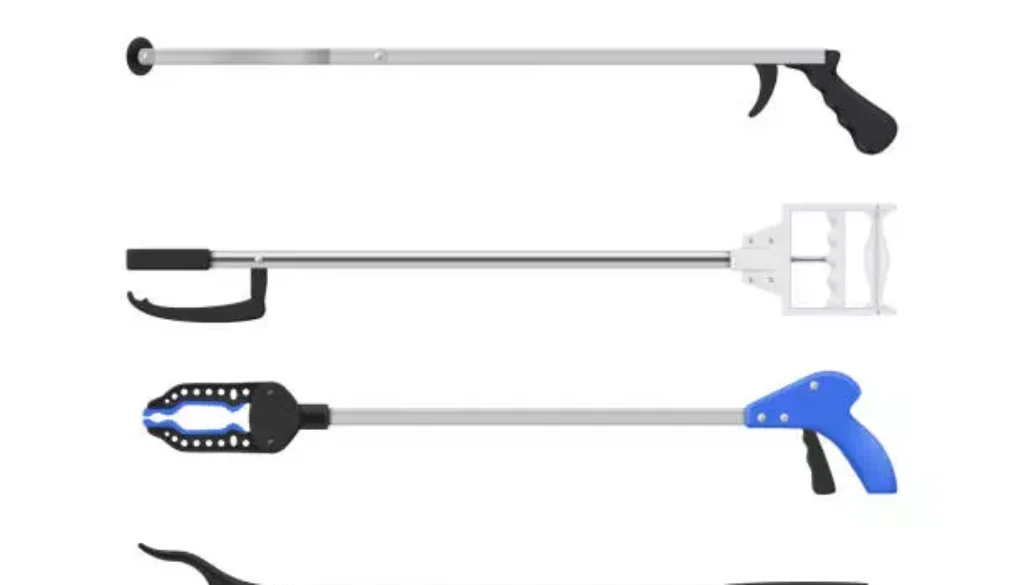
Best Grabber Tools for Seniors
Complete Guide to Grabber Tools for Seniors: Safety, Independence, and Best Products 2026
Written & Reviewed by


Last updated:
🚨 EMERGENCY SAFETY INFORMATION
STOP – Read This First Before Using Any Grabber Tool:
- Call 911 immediately if you fall while trying to reach for something, cannot get up, or experience chest pain or dizziness
- Stop using immediately if you feel pain in your back, shoulders, or arms while operating the tool
- Never climb on chairs or ladders while using a grabber tool – this defeats the purpose and increases fall risk
- Don’t exceed weight limits – most grabber tools have limits between 2-8 pounds
- Inspect the tool before each use for cracks, loose parts, or worn gripping surfaces.
- Have a spotter nearby when first learning to use your grabber tool, especially if you have balance issues.
- Avoid wet conditions where objects or your hands might slip
KEY TAKEAWAYS
Bottom Line Up Front: Grabber tools can significantly improve independence and safety for seniors, but choosing the right one for your specific needs is crucial. Approximately 1 in 4 seniors fall each year, and grabber tools help reduce the dangerous reaching, bending, and climbing that often leads to these falls.
Quick Facts 2026:
- Cost range: $12–$55 for quality tools.
- Weight limits: Typically 2–8 pounds depending on design.
- Common lengths: 26″, 32″, and 43″ are the industry standard.
- Best for: Arthritis, back problems, limited mobility, or post-surgery recovery.
- Most important feature: A comfortable, ergonomic grip and a reliable jaw mechanism.
What Are Grabber Tools and How Do They Help Seniors?
A grabber tool (also called a reacher or pickup tool) is a simple mechanical device that extends your reach when you can’t—or shouldn’t—bend, stretch, or climb. Think of it as a “long arm” with a gripper at the end, controlled by a trigger handle.
For seniors, these are more than convenience items—they are safety devices that maintain independence.
The Reality of Why Seniors Need Grabber Tools
As we age, physical changes make reaching dangerous:
- Arthritis: Affects up to 50% of adults over 65, making gripping painful.
- Balance: Changes increase fall risk when bending or stretching.
- Spinal Health: Back problems make stooping dangerous.
- Recovery: Post-surgery (hip/knee) requires strict movement restrictions.
Important Statistics (2026 Update)
- 35-40% of adults aged 65+ fall each year.
- ~47,000 older Americans are treated in ERs yearly for falls associated with reaching aids.
- 24% of seniors report using mobility aids.
- The Hard Truth: Studies continue to show that without proper selection and training, using the wrong tool can actually increase fall risk.
Important Statistics Every Senior Should Know
Fall Prevention Facts:
- An estimated 35-40% of adults aged 65 and older fall each year
- About 47,000 older Americans are treated in emergency departments yearly for falls associated with reaching and mobility aids
- 24% of adults age 65+ reported using some type of mobility aid in recent studies
- Falls can take a significant toll on a senior’s physical health and stability
The Hard Truth: Many grabber tools in use may be inappropriate, of incorrect type, or used incorrectly. Studies show that without proper selection and training, these tools can sometimes increase rather than decrease fall risk.
Types of Grabber Tools: Which One Fits Your Needs?
1. Standard Trigger-Grip Grabbers (Most Popular)
How they work: Squeeze a trigger handle to close gripper jaws Best for: General household use, people with good hand strength Weight limit: Usually 3-5 pounds Typical length: 26″, 32″, or 43″
2. Rotating Head Grabbers (Most Versatile)
How they work: Jaws can rotate 90 degrees for vertical or horizontal gripping Best for: Reaching into tight spaces, awkward angles Weight limit: 2-5 pounds Key feature: Lockable rotation for stability
3. Suction Cup Grabbers (Specialized)
How they work: Soft suction cups instead of traditional jaws Best for: Smooth objects like light bulbs, glasses, bottles Weight limit: Usually 1-3 pounds Reality check: Limited to smooth surfaces only
4. Heavy-Duty Outdoor Grabbers
How they work: Metal construction with stronger gripping force Best for: Outdoor use, heavier objects, yard work Weight limit: 5-8 pounds Drawback: Usually heavier and harder to maneuver
5. Folding/Travel Grabbers
How they work: Fold in half for storage and transport Best for: Travel, limited storage space Weight limit: 2-4 pounds Trade-off: Folding joint can be a weak point
How to Choose the Right Grabber Tool for Your Situation
Consider Your Primary Need:
For Arthritis Sufferers:
- Look for padded, ergonomic handles
- Choose tools requiring minimal grip strength
- Consider rotating heads to reduce wrist strain
- Avoid heavy models
For Post-Surgery Recovery:
- Follow your doctor’s specific restrictions
- Start with lighter, shorter models
- Ensure smooth operation with minimal force
- Consider clip-on options for wheelchairs or walkers
For General Senior Use:
- 32″ length works well for most people and tasks
- Standard trigger grip is easiest to learn
- Weight capacity of 3-5 pounds handles most items
- Non-slip jaw surfaces prevent dropping
For Limited Hand Strength:
- Look for large, comfortable handles
- Choose models with minimal trigger pressure needed
- Consider suction cup types for appropriate objects
- Avoid folding models (more parts to operate)
8 Best Grabber Tools for Seniors in 2026
1. Vive Rotating Reacher Grabber – Best Overall
- Price: $18–$25
- Length: 32 inches
- Key Feature: 90-degree rotating head
- Why it wins: Consistently outperforms in independent testing. The rubberized U-shaped jaw ensures an effortless grip without needing perfect aim.
- Best For: Seniors wanting a reliable all-purpose grabber.
According to independent testing by Reviewed, this outperformed all other reaching aids. The rubberized, U-shaped jaw ensures an effortless grip, and the claw opens wide enough that you don’t have to think much about lining it up with items.
Pros:
- Excellent build quality for the price
- Rotating head locks in place
- Comfortable trigger operation
- Strong, reliable gripping
Cons:
- May be too long for some indoor tasks
- Rotating mechanism requires learning
Best For: Seniors wanting a reliable all-purpose grabber with versatile positioning
Buy Vive Rotating Grabber on Amazon
2. RMS Featherweight Reacher – Best for Lightweight Tasks
- Price: $14–$20
- Length: 26″ or 32″
- Key Feature: Ultra-light aluminum & magnetic tip
- Why it wins: Weights only 8 ounces. It includes a clip to attach to walkers or wheelchairs.
- Best For: Seniors with severe arthritis or very limited hand strength.
Pros:
- Weighs only 8 ounces – reduces arm fatigue
- Magnetic tip picks up small metal objects
- Clips to canes, walkers, wheelchairs
- Good for people with very limited strength
Cons:
- Low weight capacity
- Not suitable for heavier items
- Basic gripping surface
Best For: Seniors with severe arthritis or very limited hand strength who need help with small, light objects
Buy RMS Featherweight Reacher on Amazon
3. Unger Nifty Nabber – Best Heavy-Duty Option
- Price: $22–$28
- Length: 36″ or 48″
- Key Feature: All-metal arm, dual-claw system
- Why it wins: Durability. Users report these lasting 12+ years. The claws can handle bottles and cans easily.
- Best For: Active seniors who do yard work or need maximum durability.
Based on user feedback from disability forums, this tool has lasted users 12+ years with regular use. The all-metal construction (except handle and rubber tips) provides superior durability.
Pros:
- Extremely durable construction
- High weight capacity
- 5-inch wide opening handles large objects
- No flex in the arm under load
Cons:
- Heavier than other options
- More expensive
- May be overkill for light household tasks
Best For: Active seniors who need outdoor capability and maximum durability
Buy Unger Nifty Nabber on Amazon
4. EZPIK Folding Grabber – Best for Travel and Storage
- Price: $19–$24
- Length: 43″ (17″ folded)
- Key Feature: Folds in half, rotating head
- Why it wins: Excellent for seniors who travel or have limited storage.
- Best For: RV living, travel, or small apartments.
Pros:
- Compact storage when folded
- Extra-long reach when extended
- Good weight capacity
- Multiple useful features
Cons:
- Folding joint can wear over time
- More complex operation
- Slightly heavier due to folding mechanism
Best For: Seniors with limited storage space or who travel frequently
Buy EZPIK Folding Grabber on Amazon
5. Cardinal Health Suction Cup Reacher – Best for Delicate Objects
- Price: $18–$22
- Length: 22 inches
- Key Feature: Dual suction cups
- Why it wins: The soft touch prevents scratching or breaking delicate items like light bulbs.
- Best For: Handling glass, jars, or smooth containers.
Pros:
- Perfect for smooth objects like light bulbs
- Won’t scratch delicate surfaces
- Compact size for indoor use
- Easy trigger operation
Cons:
- Only works on smooth surfaces
- Limited weight capacity
- Shorter reach than standard grabbers
Best For: Seniors who primarily need help with glass objects, light bulbs, or smooth containers
Buy Cardinal Health Suction Grabber
6. Medline Wide-Jaw Reacher – Best for Large Objects
- Price: $20–$26
- Length: 31 inches
- Key Feature: 4-finger trigger handle
- Why it wins: The handle allows you to use four fingers to squeeze, distribute the pressure and reduce pain.
- Best For: Arthritis sufferers who need to grab bulkier items (like toilet paper rolls or cereal boxes).
Pros:
- Wide handle distributes pressure across four fingers
- Large jaw opening for bigger items
- Good for people with hand arthritis
- Reliable construction
Cons:
- Bulkier than other options
- May be harder to maneuver in tight spaces
- Higher price point
Best For: Seniors with arthritis who need extra grip support and handle larger objects
7. AmazonCommercial Steel Grabber – Best Budget Option
- Price: $12–$16
- Length: 38 inches
- Key Feature: Steel construction
- Why it wins: No frills, just function. It is slightly heavier but very sturdy for the price.
- Best For: Budget-conscious buyers needing a backup tool.
Pros:
- Very affordable
- Sturdy steel construction
- Long reach
- Simple, reliable operation
Cons:
- Basic features only
- Heavier than aluminum options
- No special ergonomic design
Best For: Budget-conscious seniors who need a basic, reliable grabber tool
Buy AmazonCommercial Steel Grabber on Amazon
8. FitPlus PowerGrip T9 – Best Advanced Features
- Price: $28–$38
- Length: 32 inches
- Key Feature: 96 grip points, steel cable
- Why it wins: Advanced engineering with a “human-like” grip texture.
- Best For: Tech-savvy seniors who want the premium option.
Pros:
- Superior gripping with 96 contact points
- Steel cable for durability
- Advanced engineering
- Multiple useful features
Cons:
- Most expensive option
- More complex than needed for basic tasks
- May be overwhelming for some users
Best For: Tech-savvy seniors who want the most advanced grabber tool available
Buy FitPlus PowerGrip T9 on Amazon
Comparison Tables
Price and Basic Specifications
| Product | Price Range | Length | Weight Capacity | Weight of Tool |
|---|---|---|---|---|
| Vive Rotating | $18-$25 | 32″ | 5 lbs | 1.2 lbs |
| RMS Featherweight | $14-$20 | 26″/32″ | 2 lbs | 0.5 lbs |
| Unger Nifty Nabber | $22-$28 | 36″/48″ | 8 lbs | 2.1 lbs |
| EZPIK Folding | $19-$24 | 43″/17″ folded | 5 lbs | 1.5 lbs |
| Cardinal Suction | $18-$22 | 22″ | 3 lbs | 0.8 lbs |
| Medline Wide-Jaw | $20-$26 | 31″ | 5 lbs | 1.4 lbs |
| AmazonCommercial | $12-$16 | 38″ | 5 lbs | 1.8 lbs |
| FitPlus PowerGrip | $28-$38 | 32″ | 5 lbs | 1.6 lbs |
Features Comparison
| Product | Rotating Head | Magnetic Tip | Foldable | Special Grip | Best For |
|---|---|---|---|---|---|
| Vive Rotating | Yes | No | No | Rubberized jaw | All-purpose use |
| RMS Featherweight | No | Yes | No | Serrated | Light objects |
| Unger Nifty Nabber | No | Yes | No | Dual-claw | Heavy-duty use |
| EZPIK Folding | Yes | Yes | Yes | Anti-slip | Travel/storage |
| Cardinal Suction | No | No | No | Suction cups | Smooth objects |
| Medline Wide-Jaw | No | No | No | Wide 4-finger | Arthritis users |
| AmazonCommercial | No | No | No | Rubber tips | Basic needs |
| FitPlus PowerGrip | No | Yes | Yes | 96 grip points | Advanced users |
Suitability by Condition
| Condition | Recommended Tools | Why This Choice |
|---|---|---|
| Arthritis | RMS Featherweight, Medline Wide-Jaw | Lightweight, ergonomic handles, less grip pressure needed |
| Post-Surgery | Vive Rotating, Cardinal Suction | Smooth operation, reliable gripping, doctor-approved |
| Limited Mobility | Unger Nifty Nabber, EZPIK Folding | Maximum reach, high weight capacity, durability |
| Budget Constraints | AmazonCommercial, RMS Featherweight | Reliable function at lower cost |
| Travel Needs | EZPIK Folding, RMS Featherweight | Compact storage, lightweight |
Safety Guidelines: How to Use Grabber Tools Without Getting Hurt
Before You Start:
- Read the instructions – even simple tools have specific techniques
- Check weight limits – exceeding them can cause tool failure and injury
- Practice with light objects first – build confidence and technique
- Clear your path – ensure you won’t trip while using the tool
- Have good lighting – you need to see what you’re doing clearly
Proper Technique:
- Stand with feet apart for better balance
- Move slowly and deliberately – rushing leads to accidents
- Use both hands when possible – one on the tool, one for balance
- Don’t overreach – move closer to the object instead
- Test your grip before lifting – squeeze gently to ensure good hold
What NOT to Do:
- Never exceed weight limits specified by manufacturer
- Don’t use while on ladders or chairs – defeats the safety purpose
- Avoid wet or oily objects unless your tool is designed for them
- Don’t force stuck items – you might injure yourself when they come free
- Never use damaged tools – cracked handles or worn jaws are dangerous
Reality Check: What Grabber Tools Can and Cannot Do
What They CAN Do:
- Help you avoid dangerous bending, stretching, and climbing
- Pick up most household objects within their weight limits
- Extend your reach by 2-4 feet safely
- Provide independence for daily tasks
- Reduce back and joint strain significantly
What They CANNOT Do:
- Replace good judgment about what’s safe to reach for
- Work well with very heavy, awkward, or fragile items
- Eliminate all fall risks – you still need to be careful
- Fix underlying mobility or strength issues
- Work effectively if not properly maintained
Common Mistakes to Avoid:
- Buying the wrong length – too short limits usefulness, too long is hard to control
- Ignoring grip strength limitations – some tools require significant hand strength
- Not considering storage – long tools need somewhere to go when not in use
- Expecting perfection – there’s a learning curve with any new tool
When to Consult Healthcare Professionals
Talk to Your Doctor Before Using If You Have:
- Recent surgery, especially hip, back, or shoulder procedures
- Severe arthritis or joint replacements
- Balance disorders or frequent falls
- Arm or shoulder injuries
- Take medications that affect coordination or balance
See a Physical Therapist If:
- You’re unsure which type of grabber tool is best for your condition
- You need training on proper technique
- You have complex mobility needs
- You’re recovering from surgery or injury
Occupational Therapists Can Help With:
- Home safety assessments
- Determining the right tools for specific tasks
- Training in proper use techniques
- Coordinating grabber tools with other mobility aids
Frequently Asked Questions
Q: How long should my grabber tool be?
A:For most seniors, 32 inches is the standard. It provides reach without being unwieldy. If you are tall (over 6’0″), look for 36″+. For wheelchair users, 26″ is often easier to manage.
Q: Can I use a grabber tool if I have severe arthritis?
A: Many people with arthritis benefit from grabber tools, but it depends on your specific situation. Look for lightweight models with ergonomic handles that require minimal grip strength. The RMS Featherweight or Medline Wide-Jaw are often good choices, but consult your healthcare provider before starting to use any new mobility aid.
Q: Will Medicare cover this?
A: Generally, grabber tools are considered “convenience items” and are not covered by standard Medicare Part B. However, some Advantage plans or long-term care insurance policies may cover them if prescribed for post-surgery recovery.
Q: How do I maintain my grabber tool?
A: Clean the jaws regularly with mild soap and water, especially if you pick up dirty items. Check for cracks in handles or arms before each use. Store in a dry place to prevent rust. Replace worn grip surfaces when they become smooth. Most quality tools last several years with proper care. Always consult your healthcare provider if you notice any changes in how the tool functions.
Q: Can I use a grabber tool outdoors?
A: Yes, but uses a Heavy-Duty model (like the Unger). Indoor aluminum models may bend or break if used for heavy yard waste or wet debris.
Q: What if I drop something while using the grabber tool?
A: Don’t panic or immediately bend over to get it. Assess whether the item needs immediate attention. If it’s breakable, clear the area carefully. For routine items, you can use the grabber tool again or ask for help. Never sacrifice safety for convenience. Always consult your healthcare provider about proper techniques for your situation.
Professional Resources and Support
Finding Qualified Help:
- Occupational Therapists: American Occupational Therapy Association
- Physical Therapists: American Physical Therapy Association
- Home Safety Assessments: Contact your local Area Agency on Aging
Reputable Organizations:
- National Institute on Aging: Age-Related Changes and Mobility
- CDC Fall Prevention: Older Adult Fall Prevention
- Arthritis Foundation: Tools and Resources
Financial Assistance:
- Area Agencies on Aging: May have loan programs for mobility aids
- Veterans Affairs: Veterans may qualify for assistive devices
- State Assistive Technology Programs: Low-cost loan programs available in many states
Final Thoughts: Choosing the Right Tool for Your Life
Grabber tools are simple devices that can make a significant difference in maintaining independence and safety. The key is choosing the right tool for your specific needs, physical capabilities, and living situation.
Remember these important points:
- Start simple – basic models work well for most people
- Consider your strength – don’t choose tools that are too heavy or require too much grip force
- Think about storage – long tools need storage space
- Practice makes perfect – spend time learning proper technique
- Safety first – never use these tools in ways that increase your fall risk
Most importantly: These tools are meant to help you stay safe and independent, not replace good judgment. If you’re unsure about what’s safe for you to reach or lift, ask for help or consult with healthcare professionals.
The best grabber tool is the one you’ll actually use safely and consistently. Whether that’s a basic $12 model or a feature-rich $35 version depends on your needs, budget, and comfort level with technology.
Resources and Additional Reading
Government and Medical Sources:
- National Institute on Aging – Safe Mobility
- CDC – Important Facts about Falls
- Medicare – Durable Medical Equipment
- Arthritis Foundation – Daily Living Aids
Research Citations:
- Perspectives on Use of Mobility Aids in a Diverse Population of Seniors – PMC
- Mobility Device Use Among Older Adults and Incidence of Falls – PMC
- American Family Physician – Mobility Assistive Device Use in Older Adults
Disclaimer
This article is for informational purposes only and does not constitute medical advice. Grabber tools involve mechanical operation and carry a risk of injury if used improperly. Before purchasing, consult with your healthcare provider or a qualified occupational therapist, especially if you have balance disorders or recent surgeries. Product specifications and prices are estimates based on 2026 market data and may change. The author is not responsible for injuries resulting from the use of these tools.
Last Updated: January 2026
About the Authors