
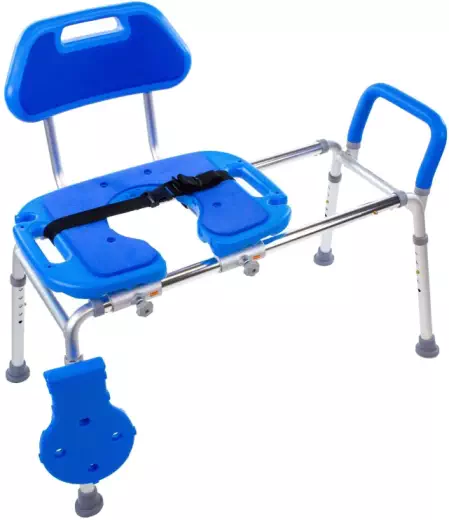
Tub Transfer Benches for Seniors
The Complete 2025 Guide to Tub Transfer Benches for Seniors: Safe Bathing Made Simple
Emergency Quick Reference
Written & Reviewed by


If You Need Help Right Now:
- Medical Emergency: Call 911 immediately
- Fall Emergencies: Call 911 or Poison Control: 1-800-222-1222
- Senior Helpline: 1-800-677-1116 (Eldercare Locator)
- Medicare Questions: 1-800-633-4227
- Crisis Text Line: Text HOME to 741741
Immediate Bathroom Safety Steps:
- Stop using the tub until you have proper safety equipment
- Use grab bars or have someone assist you for now
- Keep a phone within reach of the bathroom
- Install non-slip strips as a temporary measure
- Remove all loose rugs and bath mats that can slip
- Ensure good lighting – add a nightlight if needed
Key Takeaways: What You Need to Know First
- 80% of senior bathroom injuries happen near tubs and showers – transfer benches can prevent most of these
- Transfer benches cost $30-$300 and don’t require installation or home modifications
- Medicare typically doesn’t cover transfer benches, but they’re considered “convenience items” rather than medical equipment
- Most transfer benches support 300-500 pounds and work with standard tubs
- You don’t need a prescription to buy one, but consulting your doctor is always wise
- Proper fit is crucial – wrong size can be dangerous, so measure first
Why Bathroom Safety Can’t Wait
Every year, approximately 235,000 people are injured in bathroom falls, according to the Centers for Disease Control and Prevention. For seniors, the statistics are even more alarming.
Here’s what the numbers really mean:
- More than one-third of seniors over 65 fall each year, with 80% of these falls happening in the bathroom
- 234,000 people age 15 and older are treated in emergency rooms annually for bathroom injuries
- 30% of seniors injured in bathrooms suffer fractures
- Among seniors 85 and older, 38% require hospitalization after bathroom injuries
The good news: Most of these injuries can be prevented with simple safety equipment like transfer benches.
What Is a Tub Transfer Bench?
A tub transfer bench is a bathroom safety device that sits partially inside and partially outside your bathtub. Instead of stepping over the high edge of your tub (which can be 14-16 inches high), you sit on the bench outside the tub, then slide or scoot across into the tub.
How It Works: Step by Step
- Sit down on the part of the bench outside the tub
- Swing your legs over the tub edge while staying seated
- Slide or scoot across the bench into the tub
- Bathe safely while seated with support
- Reverse the process to get out
Reality check: This isn’t as simple as it sounds for everyone. Some people find the sliding motion difficult, and it takes practice to feel confident.
Types of Transfer Benches: Which Is Right for You?
Standard Transfer Benches
Best for: Most seniors with mild to moderate mobility issues
- Sturdy plastic or aluminum construction
- Adjustable height legs
- Non-slip feet
- Weight capacity: 300-400 lbs
- Price range: $30-$80
Sliding Transfer Benches
Best for: People who can’t easily scoot themselves across
- Seat slides smoothly on rails
- Less physical effort required
- Often includes seat locks
- Weight capacity: 300-400 lbs
- Price range: $150-$300
Padded Transfer Benches
Best for: People who take longer baths or have sensitive skin
- Cushioned seat and backrest
- More comfortable for extended use
- May be harder to slide across
- Weight capacity: 250-350 lbs
- Price range: $80-$200
Bariatric Transfer Benches
Best for: People over 300 pounds
- Heavy-duty construction
- Wider seats (often 20+ inches)
- Weight capacity: 500-850 lbs
- Price range: $150-$400
Top 7 Transfer Benches for Seniors in 2025
We researched over 25 models and chose these based on safety features, user reviews, and value.
Comparison Table: Top Transfer Benches
| Brand & Model | Type | Weight Capacity | Seat Width | Price Range* | Best For |
|---|---|---|---|---|---|
| Drive Medical 12011KD-1 | Standard | 400 lbs | 24″ | $50-$70 | Budget-conscious buyers |
| Medline Transfer Bench | Standard with Microban | 350 lbs | 22″ | $60-$90 | Hygiene-focused users |
| Platinum Health Carousel | Sliding/Swiveling | 330 lbs | 20″ | $250-$280 | Easiest transfers |
| Carex Universal Bench | Standard | 300 lbs | 20″ | $70-$100 | Versatile use |
| DMI Heavy Duty | Bariatric | 500 lbs | 24″ | $120-$150 | Larger individuals |
| Vive Health Basic | Standard | 300 lbs | 18″ | $40-$60 | Simple, affordable |
| AskSAMIE Extended | Deep Tub Special | 330 lbs | 23″ | $180-$220 | Deep/jetted tubs |
Detailed Reviews
1. Drive Medical 12011KD-1 – Best Overall Value
Why we recommend it: Great balance of features, durability, and price from a trusted medical equipment company.
✅ Pros:
- Tool-free assembly in about 10 minutes
- Reversible backrest for left or right tub entry
- Adjustable height in 0.5-inch increments (17.5″ to 22.5″)
- Large suction cups for extra stability
- Drainage holes prevent water pooling
- Lifetime limited warranty
❌ Cons:
- Hard plastic seat may be uncomfortable for long baths
- No padding included
- Suction cups can be difficult to remove
Where to buy: Amazon, medical supply stores, Home Depot
2. Medline Transfer Bench with Microban – Best for Hygiene
Why we recommend it: Built-in antimicrobial protection helps prevent bacteria growth.
✅ Pros:
- Microban coating reduces bacteria growth
- Height-adjustable backrest
- Strong, non-slip legs
- Latex-free construction
- Drainage holes for sanitation
❌ Cons:
- Only one grab bar on one side
- Slightly more expensive than basic models
- May require more frequent cleaning despite Microban
Where to buy: Medical supply retailers, online medical equipment stores
3. Platinum Health Carousel – Best for Easy Transfers
Why we recommend it: Professional sliding and swiveling design makes transfers effortless.
✅ Pros:
- Seat slides smoothly on aluminum rails
- 360-degree swivel with 90-degree locks
- Padded seat, back, and armrests
- High-contrast blue color for vision impaired
- Used in hospitals and nursing homes
- Tool-free assembly
❌ Cons:
- Most expensive option
- Bright blue color may not match bathroom decor
- More complex mechanism means more potential problems
Where to buy: Specialized mobility equipment dealers, rehabilitation supply companies
4. Carex Universal Transfer Bench – Best Versatility
Why we recommend it: Reversible design and multiple adjustment options fit most situations.
✅ Pros:
- Ergonomic backrest design
- Anti-slip rubber feet
- Easy push-button adjustments
- Works with most standard tubs
- Established brand with good customer service
❌ Cons:
- Some users find seat too narrow at 20 inches
- Push-button adjustments can be stiff
Where to buy: Carex online store, pharmacy chains, medical supply stores
5. DMI Heavy Duty Bariatric – Best for Larger Individuals
Why we recommend it: Specifically designed for people over 300 pounds with extra-wide seat.
✅ Pros:
- 500-pound weight capacity
- Extra-wide 24-inch seat
- Reinforced aluminum frame
- Large, stable base
- Commode opening available (different model)
❌ Cons:
- Takes up more bathroom space
- Higher price point
- May be overkill for smaller individuals
Where to buy: Bariatric medical supply specialists, online retailers
6. Vive Health Basic Transfer Bench – Best Budget Option
Why we recommend it: Essential safety features at an affordable price.
✅ Pros:
- Very affordable (under $60)
- Lightweight but durable
- Basic features that work well
- Good for trying transfer benches for first time
- Easy assembly
❌ Cons:
- Limited weight capacity (300 lbs)
- No advanced features
- Narrower seat than premium models
Where to buy: Online retailers, discount medical supply stores
7. AskSAMIE Extended Height – Best for Deep Tubs
Why we recommend it: Specially designed for jetted tubs, garden tubs, and deep soaking tubs.
✅ Pros:
- Extended legs adjust up to 26 inches high
- Perfect for deep or sunken tubs
- Comprehensive video instructions included
- Stable platform for high transfers
❌ Cons:
- Higher price due to specialized design
- Not needed for standard tubs
- Limited availability
Where to buy: AskSAMIE website, specialized accessibility retailers
How to Choose the Right Transfer Bench
Step 1: Measure Your Bathroom and Tub
Critical measurements you need:
| What to Measure | Why It Matters | How to Measure |
|---|---|---|
| Tub height | Bench must clear tub edge | Floor to top of tub wall |
| Tub width | Bench must span properly | Inside wall to inside wall |
| Bathroom space | Bench extends outside tub | Door to tub, toilet to tub |
| Your hip width | Seat must be wide enough | Hip to hip + 4 inches |
| Comfort height | Right height for sitting | Your knee height when seated |
Step 2: Consider Your Physical Needs
Choose based on your situation:
- Limited upper body strength: Get a sliding bench
- Balance problems: Choose model with high backrest and armrests
- Sensitive skin: Pick padded version
- Weight over 250 lbs: Select bariatric model
- Vision problems: Look for high-contrast colors
Step 3: Think About Your Bathing Habits
Questions to ask yourself:
- Do you prefer quick showers or longer soaks?
- Can you lift your legs over the tub edge while seated?
- Do you need help from a caregiver?
- How often do you bathe?
Installation and Setup: Getting It Right
Before You Start
Reality check: While transfer benches don’t require permanent installation, improper setup can be dangerous. Take your time and don’t rush.
What you’ll need:
- Your transfer bench (obviously)
- Measuring tape
- Someone to help test stability
- Instructions (don’t ignore them)
Step-by-Step Setup
1. Assemble Outside the Bathroom
- Follow instructions exactly
- Don’t skip any steps
- Test all adjustments before moving to bathroom
2. Adjust for Your Tub
- Set height so bench sits level
- Inside legs may need to be shorter than outside legs
- Tub feet should sit flat on tub bottom
3. Test Stability Before Using
- Push down firmly on all parts of seat
- Rock gently side to side
- Have someone else test if possible
- Check that legs don’t slide
Common Setup Mistakes That Cause Injuries
❌ Not adjusting for tub height difference – causes tipping
❌ Forgetting to lock adjustment pins – causes collapse
❌ Placing on slippery surfaces – causes sliding
❌ Ignoring weight limits – causes breaking
❌ Not testing stability first – causes falls
Using Your Transfer Bench Safely
Your First Time: Practice Run
Don’t try this alone the first time. Have someone nearby who can help if needed.
Step-by-Step First Use
- Approach from the side – don’t try to back up to it
- Hold grab bars or bench arms – not the backrest
- Sit down slowly – test stability before putting full weight down
- Swing legs over carefully – one at a time is fine
- Slide across gradually – don’t rush this part
- Practice getting out – often harder than getting in
Daily Use Tips
Make it routine:
- Always check that bench is stable before sitting
- Keep grab bars or assistive handles within reach
- Don’t try to reach for dropped items while seated
- Take your time – rushing causes accidents
Water management:
- Adjust shower curtain to keep water in tub
- Consider a curved shower rod for more space
- Use a handheld shower head for better control
- Keep towels within easy reach
Medicare, Insurance, and Costs
The Medicare Reality
Bottom line: Medicare does not cover transfer benches because they’re considered “convenience items” rather than medically necessary equipment.
Why Medicare doesn’t cover them:
- Available for general convenience, not just medical needs
- Not considered “durable medical equipment” (DME)
- Don’t require a prescription to purchase
- Can be used by anyone, not just people with medical conditions
What Might Be Covered
Medicare Part B covers:
- Walkers and wheelchairs (if prescribed)
- Hospital beds (if medically necessary)
- Some bathroom grab bars (rarely, with prescription)
Medicare Advantage plans:
- Some include over-the-counter benefits
- May cover bathroom safety items
- Check your specific plan’s coverage
Medicaid and State Programs
Some Medicaid programs may help, especially:
- Home and Community-Based Services (HCBS) Waivers
- State home modification programs
- Veterans Administration grants for home modifications
Other Ways to Save Money
Financial assistance options:
- USDA Rural Development grants (rural areas only)
- Area Agencies on Aging – call 1-800-677-1116
- Local nonprofits and charities
- Manufacturer discounts and promotions
- FSA/HSA accounts may cover with doctor’s note
Alternatives and Additional Safety Options
If a Transfer Bench Won’t Work
Other options to consider:
| Alternative | Cost | Best For | Pros | Cons |
|---|---|---|---|---|
| Grab bars | $20-$100 | Mild mobility issues | Permanent, reliable | Require installation |
| Bath lift | $300-$800 | Can’t slide across bench | Motorized, comfortable | Expensive, requires maintenance |
| Walk-in tub | $5,000-$15,000 | Long-term solution | Most safety features | Very expensive, requires renovation |
| Shower conversion | $2,000-$8,000 | Eliminate tub entirely | Roll-in accessibility | Permanent change, no soaking |
| Bath chair only | $30-$150 | Inside tub only | Simple, inexpensive | Still need to step over tub edge |
Combining Safety Features
Most effective approach: Use multiple safety features together
- Transfer bench + grab bars
- Non-slip mats + good lighting
- Handheld shower + raised toilet seat
- Medical alert system for emergencies
Maintenance and Care
Daily Care
- Wipe down after each use with mild soap and water
- Check stability – push on seat before sitting
- Clear drainage holes of soap buildup
- Inspect legs and feet for wear or damage
Weekly Tasks
- Deep clean with bathroom cleaner
- Check all adjustment pins are secure
- Test suction cups if your model has them
- Look for cracks in plastic parts
When to Replace Your Transfer Bench
Replace immediately if you notice:
- Cracks in the seat or frame
- Bent or damaged legs
- Loose adjustment mechanisms that won’t tighten
- Worn non-slip feet
- Any instability or wobbling
Typical lifespan: 3-5 years with regular use
Frequently Asked Questions
Do I need a prescription to buy a transfer bench?
Answer: No, you don’t need a prescription to purchase a transfer bench. They’re available over-the-counter at medical supply stores, pharmacies, and online retailers. However, it’s always wise to consult your healthcare provider about which type might work best for your specific needs and physical condition.
Can I use a transfer bench if I’m in a wheelchair?
Answer: Yes, but you’ll need a bench with specific features like a wider seat, lower height adjustment range, and possibly removable armrests for easier transfers. Look for models specifically labeled as “wheelchair accessible.” Always consult your occupational therapist or healthcare provider to ensure proper fit and safe transfer techniques.
Will a transfer bench work with my jetted tub or garden tub?
Answer: Standard transfer benches may not work with deep tubs. You’ll need a model with extended height legs that can adjust to 24+ inches high. Brands like AskSAMIE make specialized models for deep tubs. Measure your tub height first and consult your healthcare provider about whether this option is safe for your mobility level.
How do I keep water from splashing out of the tub?
Answer: This is a common concern. Solutions include: using a curved shower rod to give more curtain space, installing a splash guard extension, or using a shower curtain liner that extends lower. Some people also use towels along the tub edge. Your healthcare provider or occupational therapist can suggest specific adaptations for your bathroom layout.
What if the transfer bench doesn’t fit my tub?
Answer: Most quality transfer benches have adjustable legs and can fit standard tubs. However, if yours doesn’t fit properly, don’t try to force it or use it anyway – this is dangerous. Contact the manufacturer or retailer for guidance, and consider consulting your healthcare provider about alternative solutions that might work better for your specific tub design.
Can I travel with a transfer bench?
Answer: Most transfer benches are too large and heavy for easy travel. However, some manufacturers make lightweight, portable models, and there are folding options available. If you travel frequently, ask your healthcare provider about portable shower chairs or other travel-friendly mobility aids that might meet your needs.
Resources and Support
Government Resources
- Eldercare Locator: eldercare.acl.gov | 1-800-677-1116
- Medicare: medicare.gov | 1-800-633-4227
- Centers for Disease Control – Fall Prevention: cdc.gov/falls
- USDA Rural Development: rd.usda.gov
Safety Organizations
- National Council on Aging: ncoa.org
- National Institute on Aging: nia.nih.gov
- American Occupational Therapy Association: aota.org
Where to Buy Transfer Benches
- Medical supply stores (local and online)
- Pharmacy chains (CVS, Walgreens, Rite Aid)
- Home improvement stores (Home Depot, Lowe’s)
- Online retailers (Amazon, eBay, manufacturer websites)
- Senior-focused retailers (Senior.com)
Professional Help
- Occupational therapists – for proper fitting and training
- Physical therapists – for strength and mobility assessment
- Home health aides – for assistance with daily use
- Medical social workers – for insurance and financial assistance
Taking Action: Your Next Steps
If You Need a Transfer Bench Right Away
- Measure your tub and bathroom space
- Consider your budget ($30-$300 range)
- Choose based on your physical needs (standard vs. sliding vs. bariatric)
- Buy from a reputable retailer with good return policy
- Have someone help with first use
If You’re Planning Ahead
- Talk to your doctor about bathroom safety
- Consider occupational therapy assessment
- Research your insurance coverage
- Look into financial assistance programs
- Plan for other bathroom modifications
Red Flags: When to Seek Professional Help
- You’re falling frequently
- You’re avoiding bathing due to fear
- You have significant balance problems
- You can’t support your weight on your arms
- You have cognitive issues that affect safety
Remember: The goal is maintaining your independence and safety. A transfer bench is often just one part of a comprehensive bathroom safety plan.
Disclaimer
This guide provides general information about tub transfer benches for educational purposes. Product availability, features, and prices can change frequently and vary by location. Always verify current information directly with manufacturers and retailers before making any purchase decisions.
Medicare, Medicaid, and insurance coverage rules change regularly. Contact the relevant agencies directly to confirm current coverage rules and eligibility requirements in your specific situation.
This information should not be considered medical advice. Consult with your healthcare provider, occupational therapist, or physical therapist about which bathroom safety modifications are appropriate for your specific health conditions and mobility needs. They can also provide training on proper use of transfer benches and other safety equipment.
Installation and use of transfer benches should follow manufacturer instructions. Improper setup or use can result in injury. When in doubt, seek help from healthcare professionals or experienced caregivers.
Last updated: August 2025 | Sources: CDC, Medicare.gov, manufacturer specifications, and medical equipment retailers
About the Authors